Food & Wine On Board
When it comes to celebrating life’s special moments, nothing quite compares to a glass of French Champagne. This luxurious sparkling wine, produced exclusively in the Champagne region of France, is synonymous with elegance and celebration on luxury barge cruises France. In this comprehensive guide, we’ll explore the history, production process, types, tasting notes, and food pairings of French Champagne, ensuring you have all the knowledge you need to appreciate this exquisite drink.

Upon arrival all-inclusive luxury barge cruises, you will be greeted by your cheerful crew and experience our Grand Victoria welcome. While we get you checked in and the crew take your luggage to your stateroom, you’ll have the chance to sit and relax with our signature champagne welcome before your first of many incredible dinners on board an exclusive Burgundy canal cruises.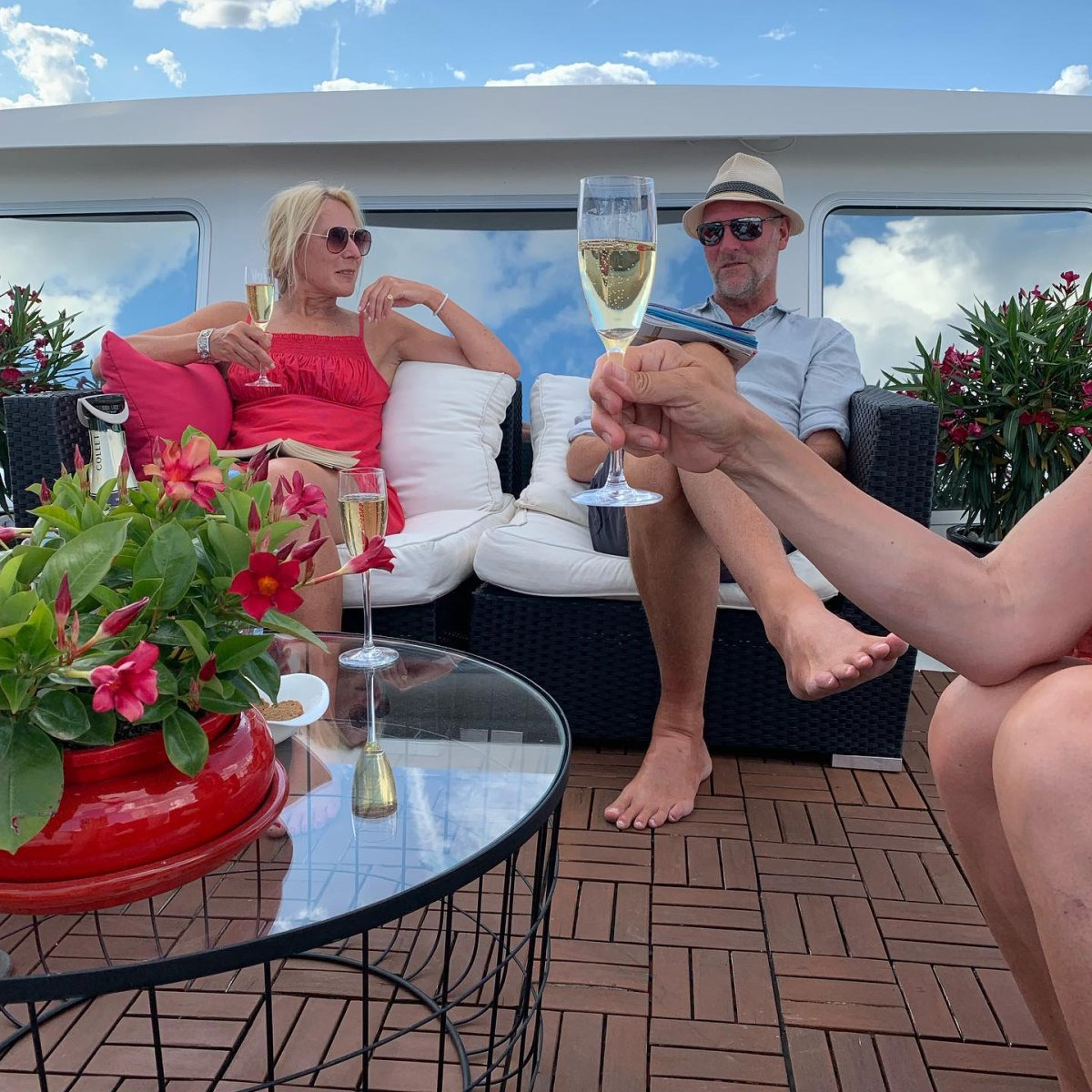
What is Champagne?
Champagne is a sparkling wine made from specific grape varieties, primarily Chardonnay, Pinot Noir, and Pinot Meunier. To be legally labeled as Champagne, the wine must come from the Champagne region and adhere to strict production methods outlined by the Appellation d'Origine Contrôlée (AOC). This ensures that each bottle reflects the unique terroir of the region.
The History of Champagne
The history of Champagne dates back to the Roman times, but it was in the 17th century that the wine began to gain fame. Initially, it was a still wine, but the region’s unique climate and the development of the méthode champenoise (traditional method) transformed it into the sparkling wine we know today. By the 19th century, Champagne had become a symbol of luxury and celebration, enjoyed by royalty and celebrities alike.
The Production Process
The production of Champagne involves several key steps:
1. Harvesting: Grapes are harvested by hand in late summer to ensure optimal ripeness.
2. Pressing: The grapes are gently pressed to extract the juice, which is then fermented to create base wine.
3. Blending: Different base wines from various grape varieties and vineyards are blended to achieve a consistent flavor profile.
4. Secondary Fermentation: The blended wine is bottled with a mixture of sugar and yeast, triggering a second fermentation that creates the signature bubbles.
5. Riddling and Disgorging: Bottles are gradually tilted and rotated to collect sediment, which is then removed before corking.
6. Aging: Champagne must age for a minimum of 15 months, but many producers age their wines for much longer to develop complexity.
Types of Champagne
Champagne is categorized based on various factors, including grape variety and sweetness levels:
• Brut: The most popular style, brut Champagne has very little residual sugar, making it dry and crisp.
• Extra Brut: Even drier than brut, extra brut Champagne has minimal sugar, showcasing the wine’s acidity and minerality.
• Demi-Sec: This sweeter style has higher sugar levels, making it a delightful choice for dessert pairings.
• Vintage: Made from grapes harvested in a single year, vintage Champagne reflects the specific characteristics of that year’s harvest and is typically aged longer.
• Non-Vintage (NV): This style blends wines from multiple years, ensuring consistency and balance in flavor.
Tasting Champagne: What to Look For When tasting Champagne, consider the following elements:
• Appearance: Observe the color, which ranges from pale gold to deep amber, and the effervescence, noting the size and persistence of the bubbles.
• Nose: Take a moment to inhale the aromas. Common notes include citrus, apple, brioche, and floral hints.
• Palate: Sip slowly and allow the flavors to unfold. Champagne can exhibit a range of flavors, from fruity and floral to nutty and toasty.
• Finish: Pay attention to the aftertaste, which should be refreshing and lingering.
Food Pairings with Champagne
Champagne is incredibly versatile and pairs well with a variety of dishes.
Consider these pairings:
• Seafood: The crisp acidity of Champagne complements oysters, shrimp, and sushi beautifully.
• Cheese: Soft cheeses like brie or goat cheese enhance the flavors of the wine. • Salads: Light salads with vinaigrettes are perfect for balancing Champagne’s richness.
• Desserts: Pair demi-sec Champagne with fruit tarts, chocolate desserts, or creamy pastries for a delightful finish.
Conclusion
French Champagne is more than just a sparkling wine; it’s a celebration of craftsmanship, tradition, and the art of winemaking. With its rich history, diverse styles, and food pairing versatility, Champagne offers something for everyone. Whether you’re toasting to a special occasion or simply enjoying a quiet evening, a glass of Champagne elevates the experience.
Discover More
If you’re eager to explore the world of Champagne further, consider visiting the Champagne region in France. Tour the vineyards, sample different styles, and learn from the experts about the intricate process of creating this iconic sparkling wine. Cheers to the magic of French Champagne!
Tell us your preferred travel dates, group size, and whether Burgundy or Provence feels like the right fit. We’ll help you choose the best option and guide you through availability and next steps.
